
Education

One Building, Many Lessons

Vancouver Block is more than a heritage landmark. It is a primary source for architecture, economics, urban geography, entrepreneurship, and civic memory — a single building that opens doors to an entire city's story.

Learning Through Place

A Case Study in the Built Environment

Vancouver Block at 736 Granville Street offers something rare in heritage education: a single site that connects multiple disciplines. Completed in 1912 during the city's most ambitious building boom, it embodies the economic confidence, material culture, and civic aspirations of early Vancouver. Its terracotta facade, four-faced clock tower, marble lobby, and century of continuous commercial use make it a rich subject for students, educators, and researchers at every level.

This page provides pathways into the building's story for different audiences. Teachers can find curriculum-connected modules and classroom-ready questions. Students can explore the building as evidence — learning to read architecture, economics, and urban change in its materials and design. Researchers can access heritage register references, suggested archival sources, and a bibliography of related scholarship.

Whether you visit in person or explore online, Vancouver Block invites you to ask the kind of questions that buildings can answer — about who built them, why, for whom, and what they tell us about the city that surrounds them.
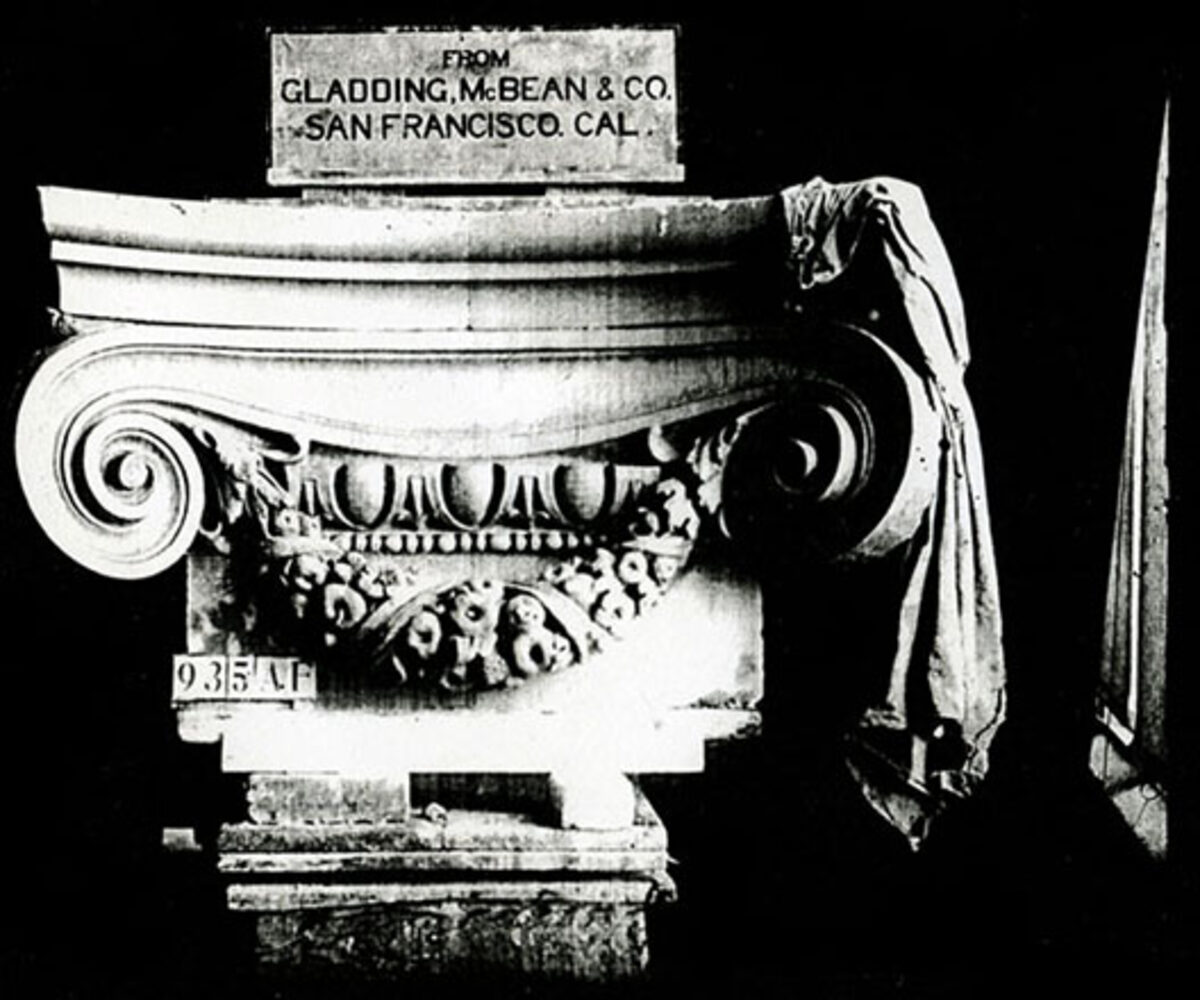
Close-up of terracotta ornament on Vancouver Block's facade

Who This Is For

Pathways for Teachers and Students

For Teachers

Vancouver Block connects to Social Studies, Geography, Visual Arts, and Career Education curricula across multiple grade levels. Use the education modules below to bring architecture, heritage conservation, and entrepreneurial history into your classroom.

  • Curriculum-aligned modules with discussion questions and activities
  • Walking tour guides for field trips to Granville Street
  • Primary source connections to City of Vancouver Archives and heritage registers
  • Adaptable for Grades 7 through 12 and introductory post-secondary

For Students

Use this site as a research tool and starting point for projects about Vancouver's history, architecture, or urban development. The building is a window into how cities grow, how entrepreneurs shape places, and how heritage conservation protects shared memory.

  • Explore architecture as evidence of economic and cultural ambition
  • Research the entrepreneurs, architects, and workers who shaped downtown
  • Compare Vancouver Block to other heritage landmarks using the walking tour
  • Use the glossary and discussion questions as starting points for essays and presentations

Modules

Education Hub

Structured learning modules connecting Vancouver Block to curriculum topics in architecture, economics, geography, heritage conservation, and urban identity.

For Educators & Learners

Education Hub

Lesson modules, glossary terms, and discussion questions that use Vancouver Block as a lens for exploring architecture, heritage, economics, and the urban environment.

Lesson Modules

Architecture as Evidence

StudentsGrades 8–1245 minutes

Use the building's terracotta, clock tower, and lobby finishes to understand Edwardian Commercial architecture and what buildings can tell us about the societies that produced them.

Sample Questions

  • What can a building tell us about the economy that produced it?
  • Why do some buildings become landmarks while others are forgotten?

Heritage Conservation in Practice

Students & TeachersGrades 9–1260 minutes

Explore why heritage buildings are conserved, how conservation differs from preservation, and what adaptive reuse means for the future of historic commercial districts.

Sample Questions

  • What is the difference between preservation, conservation, and restoration?
  • Why is adaptive reuse often better than demolition?

Vancouver's Commercial Growth

StudentsGrades 10–1250 minutes

Trace the economic forces that shaped downtown Vancouver between 1886 and 1914, using Vancouver Block as a case study in entrepreneurial city-building.

Sample Questions

  • How did the railway change Vancouver's economic prospects?
  • Why did entrepreneurs like Dominic Burns invest in tall buildings?

Neon and Urban Identity

All AgesGeneral30 minutes

Explore how neon signs and illuminated clock towers contributed to the visual identity of Granville Street and Vancouver's nighttime cityscape.

Sample Questions

  • How did electric lighting change the experience of cities at night?
  • What did neon signs communicate about a street's purpose?

Mapping Historic Downtown

StudentsGrades 7–1040 minutes

Use maps and observation to understand how Vancouver's downtown grid developed around key intersections, transit routes, and landmark buildings.

Sample Questions

  • Why was the Granville and Georgia intersection so important?
  • How did transit routes shape where tall buildings were built?

Entrepreneurs and City-Building

Students & PublicGrades 10–1255 minutes

Study how individual entrepreneurs shaped the physical city through real estate, architecture, and commercial ambition, using Dominic Burns and Vancouver Block as a starting point.

Sample Questions

  • How did meatpacking profits become a downtown office tower?
  • What risks did developers take when building tall in 1910?

Glossary

Discussion Questions

What did Vancouver want to become in 1912?

Why did entrepreneurs build upward?

How did architecture express commercial confidence?

What materials signalled prestige?

Why did Granville Street become so visually important?

What does heritage status protect?

How do old buildings remain useful?

What would downtown lose if buildings like this disappeared?

How does one building connect architecture, business, labour, transport, advertising, and public memory?

Inquiry

Questions This Building Can Answer

Every heritage building holds answers to questions about the city that built it. These questions use Vancouver Block as a starting point for deeper investigation.

City Identity

What did Vancouver want to become in 1912?

Vancouver Block was built during a boom that imagined the city as a major Pacific port and commercial hub.

Urban Economics

Why did entrepreneurs build upward?

Tall buildings maximized valuable downtown land and signalled commercial confidence to investors and tenants.

Design & Culture

How did architecture express commercial confidence?

Ornamental façades, expensive materials, and prominent locations turned buildings into advertisements for the businesses they housed.

Materials & Craft

What materials signalled prestige?

Terracotta, marble, and bronze were chosen for their durability, beauty, and association with established European architecture.

Streetscape

Why did Granville Street become so visually important?

Granville Street concentrated retail, offices, theatres, and transit, making it the city's most visible commercial stage.

Conservation

What does heritage status protect?

Heritage designation protects character-defining elements — the features that make a building historically and architecturally significant.

Adaptive Reuse

How do old buildings remain useful?

Vancouver Block has remained a productive commercial building for over a century, adapting to changing tenants and uses.

Civic Memory

What would downtown lose if buildings like this disappeared?

The city would lose physical evidence of its founding ambitions, material culture, and the human stories embedded in its built environment.

Systems Thinking

How does one building connect architecture, business, labour, transport, advertising, and public memory?

Vancouver Block sits at the intersection of many urban systems — it was designed, financed, built, leased, illuminated, and conserved through overlapping networks of enterprise and civic care.

Research

For Researchers

Reference information, archival sources, and research pathways for scholars, students, and heritage professionals investigating Vancouver Block and its context.

Building Information

Names
Vancouver Block, The Vancouver Block
Address
736 Granville Street, Vancouver, British Columbia, Canada
Architects
Parr & Fee
Developer
Dominic Burns
Completed
1912
Style
Edwardian Commercial
Height
Approximately 15 storeys / 265 feet to flagpole

Suggested Search Terms

Vancouver BlockVancouver Block 736 GranvilleDominic Burns VancouverParr and Fee Vancouver BlockGranville Street clock towerVancouver Edwardian Commercial architectureVancouver neon clock towerVancouver Heritage Register Class ACanadian Register of Historic Places Vancouver BlockBurns meatpacking Vancouver real estateGranville Street history Vancouver

Selected Bibliography

  • Kalman, Harold. A History of Canadian Architecture. Oxford University Press.
  • Luxton, Donald. Building the West: The Early Architects of British Columbia.
  • City of Vancouver. Vancouver Heritage Register documentation.
  • Parks Canada. Canadian Register of Historic Places: Vancouver Block entry.
  • Vancouver Heritage Foundation. Walking tour materials and publications.

This bibliography is a starting point. Researchers are encouraged to consult the institutions listed above for comprehensive archival and published sources.

Field Activity

Look Up: A Sidewalk Observation Exercise

Stand on Granville Street opposite 736 and spend fifteen minutes looking carefully at the building. Use these prompts to guide your observation.

1
Tripartite composition

Count the storeys from the street-level base to the clock tower. How does the building divide itself into distinct visual sections?

2
Decorative vocabulary

Look at the terracotta ornament above the third floor. Can you identify any repeating motifs, mouldings, or sculptural elements?

3
Street-level interface

Examine the ground-floor entrance. How does the building meet the sidewalk? What materials and design choices engage pedestrians?

4
Civic presence

Step back and find the clock tower. How many clock faces can you see from this angle? What might the tower communicate about the building and the street?

5
Urban context and change

Compare Vancouver Block to the buildings on either side. What differences in age, style, materials, and height can you observe?

Tip for teachers: This activity works best in small groups of 3-4 students. Ask each group to sketch one element that stands out to them, then share observations as a class. Encourage students to describe what they see before explaining what it might mean.

Challenge

Research Challenge

A comparative exercise for students and independent researchers.

Compare Vancouver Block to Another Heritage Building

Choose another heritage-listed building in Vancouver — the Sun Tower, the Marine Building, the Dominion Building, or another structure that interests you. Research both buildings and compare them across at least three of the following dimensions:

  • Date of construction and historical context
  • Architectural style and materials
  • Developer or patron and their motivations
  • Original use versus current use
  • Heritage designation status and timeline
  • Role in the streetscape and city skyline

Present your findings as a short essay, a visual poster, or a presentation. Use primary sources where possible — the City of Vancouver Archives, heritage register entries, and published architectural histories are good starting points.

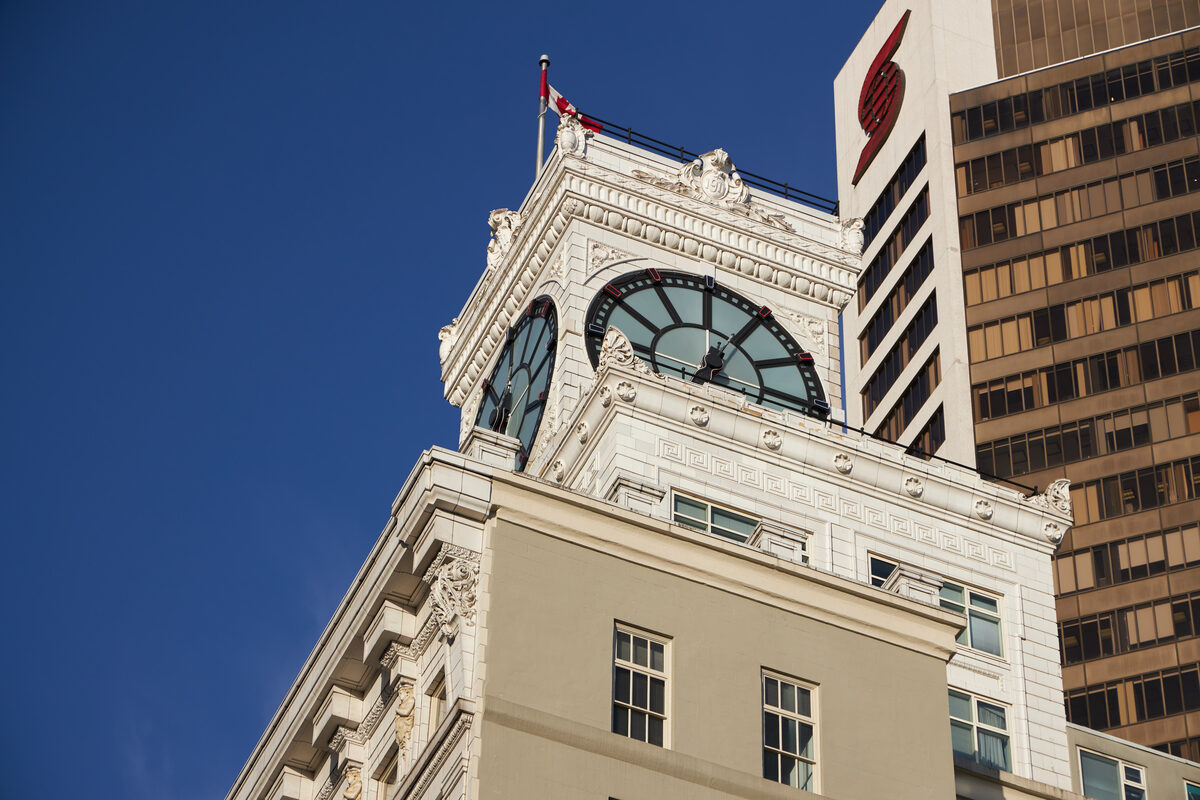
Vancouver Block clock tower against a clear blue sky

Resources

Downloadable Resources

Worksheets, teacher guides, and activity sheets for classroom use. These resources are currently in development.

Student Worksheet

Observation prompts and guided questions for field visits to Vancouver Block.

Coming Soon

Teacher Guide

Curriculum connections, lesson plans, and assessment ideas for Grades 7-12.

Coming Soon

Photo Activity Pack

A guided photography exercise for students visiting Granville Street.

Coming Soon

Downloadable resources are in development. If you are an educator interested in using Vancouver Block in your classroom, please contact us to discuss your needs.