Entrepreneurial Vancouver

Architecture as Enterprise

Vancouver Block was not only designed; it was wagered into existence. Behind every cornice and column stands a story of capital, risk, and belief in a city's future.

Context

Vancouver in 1912

A city on the rise: railways, immigration, trade, and the confidence of a generation.

To understand why Vancouver Block was built, you have to understand what Vancouver was in 1912. It was, by any measure, one of the most rapidly growing cities in the world. In 1891, its population was roughly thirteen thousand. By 1911, it had surpassed one hundred thousand. In two decades, a small coastal settlement had become the largest city in western Canada, with a port that linked the prairies to Pacific trade routes and a commercial district that was being rebuilt in stone, steel, and terracotta as fast as architects could draw and contractors could pour.

The forces driving this transformation were enormous. The Canadian Pacific Railway, completed in 1886, gave Vancouver its reason for existing as a major city -- it was the western terminus of the transcontinental line, the point where the products of the Canadian interior met the ships of the Pacific. Timber, fish, grain, and minerals moved through the port in growing volumes. Capital flowed in from eastern Canada, Britain, and the United States. Immigrants arrived from across Europe, from China and Japan, from the American west, bringing labour, skills, and entrepreneurial ambition.

The mood was one of extraordinary confidence. Real estate prices were rising. New businesses were opening. The streetcar system was expanding. Banks, insurance companies, and law firms competed for the best addresses in the downtown core. The city's leaders believed they were building a metropolis that would rival San Francisco, Seattle, and even the great commercial cities of the east. It was, in hindsight, the peak of a speculative boom -- but at the time, it felt like the natural trajectory of an inevitable future.

This was the Vancouver that Dominic Burns saw when he decided to build. Not the city as it was, but the city as he believed it would become.
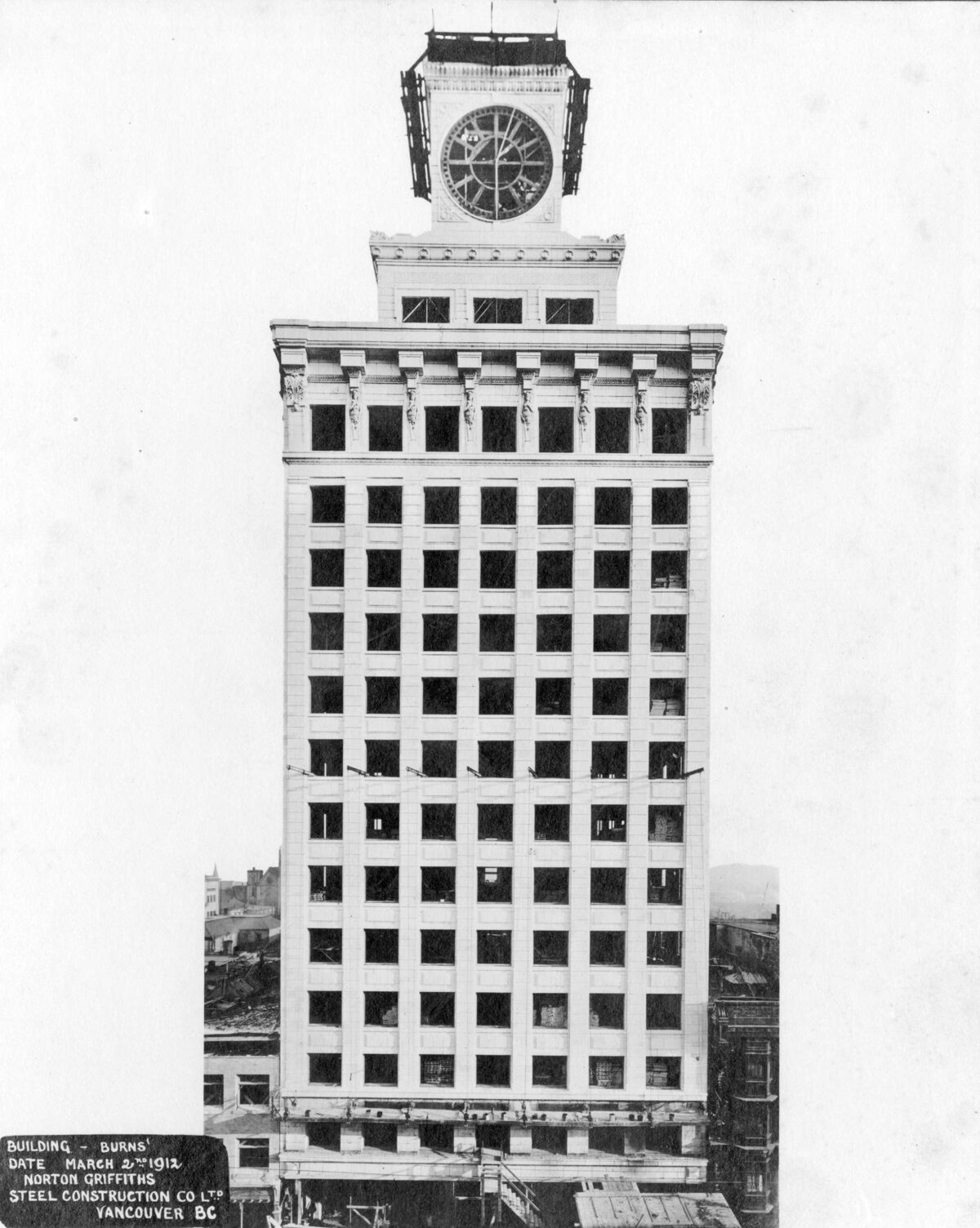
Vancouver Block under construction, circa 1912

The Patron

Dominic Burns and the Burns Network

From cattle yards to clock towers: how industrial capital built a commercial landmark.

Dominic Burns came to western Canada as part of the generation that built the infrastructure of the modern west. Together with his brother Patrick, he helped establish P. Burns & Co., a meatpacking and ranching enterprise that grew into one of the largest and most vertically integrated food businesses in the country. From stockyards in Alberta to cold-storage depots on the coast, the Burns network was a supply chain that connected ranch land to urban markets, and its scale generated the capital that made buildings like Vancouver Block possible.

The transition from industrial enterprise to urban real estate was a common pattern among the business leaders of the Edwardian west. Men who had made their fortunes in cattle, timber, mining, and the railway invested their profits in the built environment of the cities they were helping to create. A building like Vancouver Block was simultaneously a financial investment, a commercial headquarters, and a personal monument -- a visible expression of the patron's wealth, taste, and civic ambition.

Burns did not simply hire an architect and wait for the building to go up. His decision to commission a fifteen-storey tower with a clock, terracotta cladding, and a marble lobby at one of the most prominent intersections in the city was a calculated statement. It said: I believe in this city enough to risk my capital on its future. The building was, in the truest sense, an entrepreneurial act.

Enterprise

A Building as a Business Bet

Height, ornament, location, and a clock tower: every choice expressed confidence in the city's future.

Constructing a fifteen-storey building in Vancouver in 1910 was not a cautious investment. It was an act of speculation -- a wager on the continued growth of the city's commercial district, on the demand for high-quality office space, on the value of a prominent corner location at Granville and Georgia. Every element of the building's design reinforced this bet.

The height itself was a statement. At fifteen storeys, Vancouver Block was among the tallest buildings in the city. Height conveyed prestige, commanded higher rents on upper floors, and -- critically -- ensured that the building would be visible from a distance, advertising itself as a commercial address of the first rank. The clock tower, visible from blocks away, amplified this effect, transforming the building from a private investment into a public landmark.

The terracotta cladding, the marble lobby, the brass fixtures -- these were not extravagances. They were signals. A building dressed in expensive materials attracted the kind of tenants -- law firms, financial houses, corporate offices -- who would pay premium rents and lend their own prestige to the address. Every dollar spent on ornament was, in a sense, an investment in the building's commercial reputation.

The location was equally deliberate. Granville and Georgia was the heart of the commercial district, served by streetcar lines and surrounded by the institutions -- banks, department stores, hotels -- that constituted the ecosystem of a modern business centre. Burns positioned his building at the centre of the action, betting that the intersection would remain the gravitational core of Vancouver's commercial life for decades to come. That bet, it turned out, was well placed.

Explore

Entrepreneurial Vancouver Explorer

Discover the people, industries, and commercial networks that shaped the city through the lens of Vancouver Block.

Networks of Enterprise

Entrepreneurial Vancouver

Vancouver Block did not exist in isolation. It was a node in a network of people, industries, infrastructure, and ideas that built a city from the ground up.

Dominic Burns

Meatpacking & Real Estate

1880s–1920sPeople

Dominic Burns was part of the Burns family meatpacking empire, one of western Canada's most significant early businesses. His decision to commission a fifteen-storey office tower expressed confidence in Vancouver's commercial future.

Why It MattersBurns represents how industrial capital was reinvested into urban real estate, physically shaping the city's skyline and commercial identity.

Parr & Fee

Architecture Firm

1900s–1910sPeople

The architectural firm of Parr & Fee designed several significant Vancouver buildings in the Edwardian era. Their work helped establish the ornamental, classically-influenced commercial style that defined pre-war downtown.

Why It MattersParr & Fee translated entrepreneurial ambition into physical form, giving Vancouver's commercial district its distinctive architectural character.

The Commercial Club

Business Networks

1910s–1930sInfrastructure

The upper floors of Vancouver Block hosted business clubs and professional tenants who used the building as a base for commercial networking, deal-making, and city-building.

Why It MattersOffice towers were not just buildings — they were infrastructure for business culture, connecting entrepreneurs, lawyers, brokers, and civic leaders.

Granville Street

Commercial Corridor

1900s–PresentPlaces

Granville Street developed as Vancouver's primary commercial thoroughfare, concentrating retail, office, entertainment, and transit functions along a single high-profile corridor.

Why It MattersGranville Street was where commerce became theatre. Illuminated signs, department store windows, and landmark buildings like Vancouver Block turned shopping and business into public spectacle.

Rail and Port Economy

Transportation Networks

1887–1920sInfrastructure

The arrival of the Canadian Pacific Railway in 1887 and the growth of Vancouver's port connected the city to national and international trade networks, creating the economic conditions that made buildings like Vancouver Block possible.

Why It MattersWithout the railway and port, Vancouver would not have attracted the investment that produced its early skyline. Every downtown office tower was connected to the logistics of continental trade.

Meatpacking and Western Markets

Industrial Capital

1890s–1920sIndustries

The Burns family built a meatpacking network across western Canada, processing and distributing meat from the ranching regions to growing urban markets. This industrial wealth funded the construction of Vancouver Block.

Why It MattersThe connection between meatpacking and architecture reveals how resource-based industries funded urban development in young western cities.

Real Estate and Office Towers

Urban Development

1900s–1914Industries

Vancouver's pre-war real estate boom produced a wave of tall commercial buildings that transformed the city from a frontier town into a recognizable urban centre.

Why It MattersReal estate development was both a business activity and a civic statement. Tall buildings signalled confidence, attracted tenants, and established commercial districts.

Neon Advertising Culture

Visual Identity

1920s–1960sLegacy

Beginning in the 1920s, neon signs transformed Granville Street into one of North America's most visually vibrant commercial corridors. The clock tower's illumination connected Vancouver Block to this culture of electric spectacle.

Why It MattersNeon was not just decoration. It was a medium through which businesses competed for attention and streets developed recognizable identities.

Heritage Conservation

Modern Stewardship

1974–PresentLegacy

The recognition of Vancouver Block's heritage value — from municipal designation in 1974 to Canadian Register listing in 2009 — reflects a growing understanding that historic buildings carry civic meaning beyond their commercial function.

Why It MattersConservation is itself a form of enterprise: it requires investment, expertise, public advocacy, and a long-term vision for what cities should preserve.

Each card represents a node in the network of enterprise, infrastructure, and culture that produced and sustained Vancouver Block for more than a century.

The Street

Granville Street as Commercial Theatre

The street was not just a route. It was a stage.

To walk along Granville Street in the early twentieth century was to experience commerce as spectacle. Department stores like Woodward's and the Hudson's Bay Company filled their windows with elaborate displays. Banks presented granite facades and brass-doored entrances that projected solidity and trust. Hotels, theatres, and restaurants competed for the attention of pedestrians, transit riders, and the steadily growing population of downtown office workers.

Vancouver Block sat at the epicentre of this commercial theatre. Its Granville Street facade presented a continuous wall of terracotta ornament and glass, engaging the pedestrian eye from sidewalk level to clock tower. The building's ground-floor retail spaces connected it to the daily commercial life of the street, while its upper-floor offices linked it to the professional and financial networks that operated above the retail bustle.

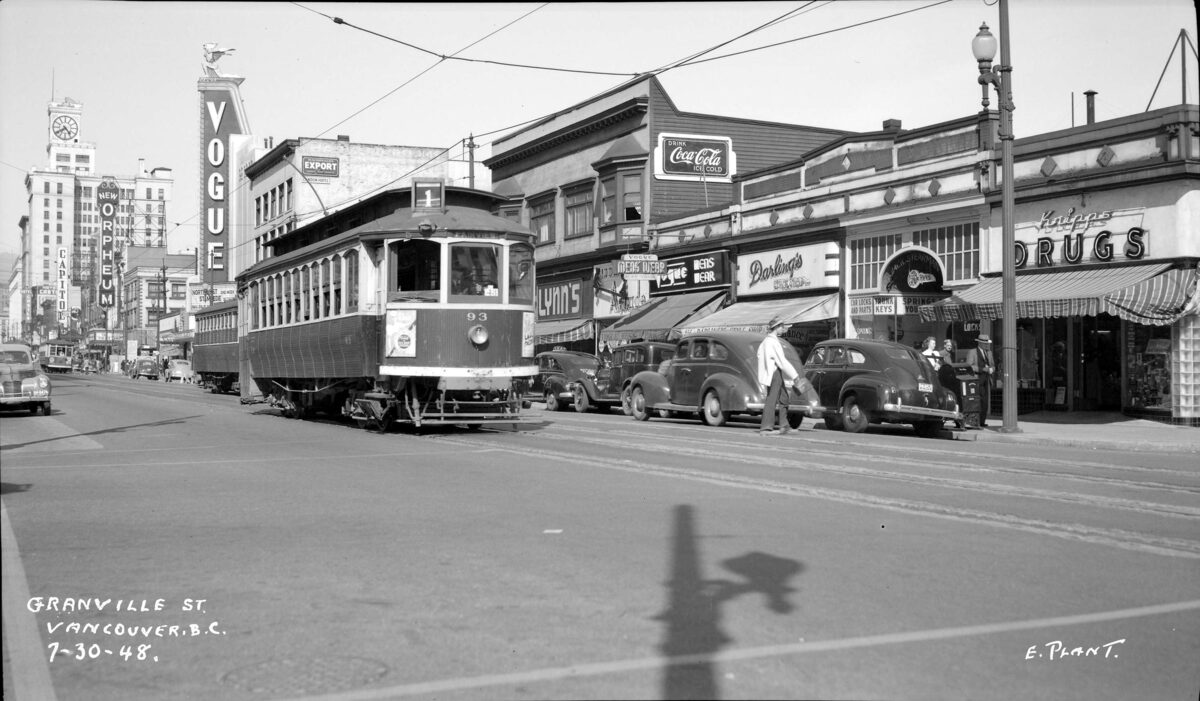
By mid-century, Granville Street had become one of Canada's most famous neon corridors. Theatre marquees, department store signs, and illuminated advertisements created a nocturnal streetscape that rivalled the commercial districts of much larger cities. The neon-lit clock tower of Vancouver Block presided over this landscape, its illuminated faces marking the hours above a street that seemed to glow with commercial energy.

The street has changed dramatically since then -- pedestrian malls, transit conversions, shifts in retail culture, and the displacement of entertainment districts have all reshaped its character. But Vancouver Block remains, an anchor of visual continuity that connects the Granville Street of today to the commercial theatre of a century ago.

Infrastructure

Office Towers and Business Infrastructure

How tall buildings created the physical framework for a modern commercial city.

A tall commercial building is more than a stack of floors. It is a piece of urban infrastructure -- a machine for concentrating people, transactions, and information in a small footprint. The office tower, as a building type, emerged in the late nineteenth century in response to a specific economic need: the need to house the growing army of clerks, managers, accountants, lawyers, and brokers who constituted the white-collar workforce of the modern corporation.

Vancouver Block was designed to serve this need. Its floor plates were organized as leasable commercial space, with private offices arranged around a central corridor and elevator core. Natural light reached every office through the building's generous windows. Elevators -- still a relative novelty in Vancouver -- provided vertical circulation. The lobby served as a shared public space, a threshold between the street and the private world of business above.

Buildings like Vancouver Block did not just reflect the growth of Vancouver's commercial economy; they enabled it. By concentrating professional services in a single location, they created the density of interaction that a modern business district requires. A lawyer on the seventh floor could walk down the hall to consult an accountant, take the elevator to meet an insurance agent, and return to the lobby to greet a client arriving from the street -- all without leaving the building. This density of professional exchange was the real product of the office tower, and it was the foundation on which Vancouver's commercial life was built.

Then & Now

Then and Now

Vancouver's entrepreneurial identity has changed, but the impulse to build, invest, and believe in the future remains.

The Vancouver that Dominic Burns knew was a city of resource extraction, railway commerce, and Pacific trade. Today's Vancouver is shaped by technology, real estate development, film production, and global capital flows. The industries have changed, but the underlying dynamic -- the willingness to invest in the built environment as an expression of confidence in the city's future -- remains recognizable.

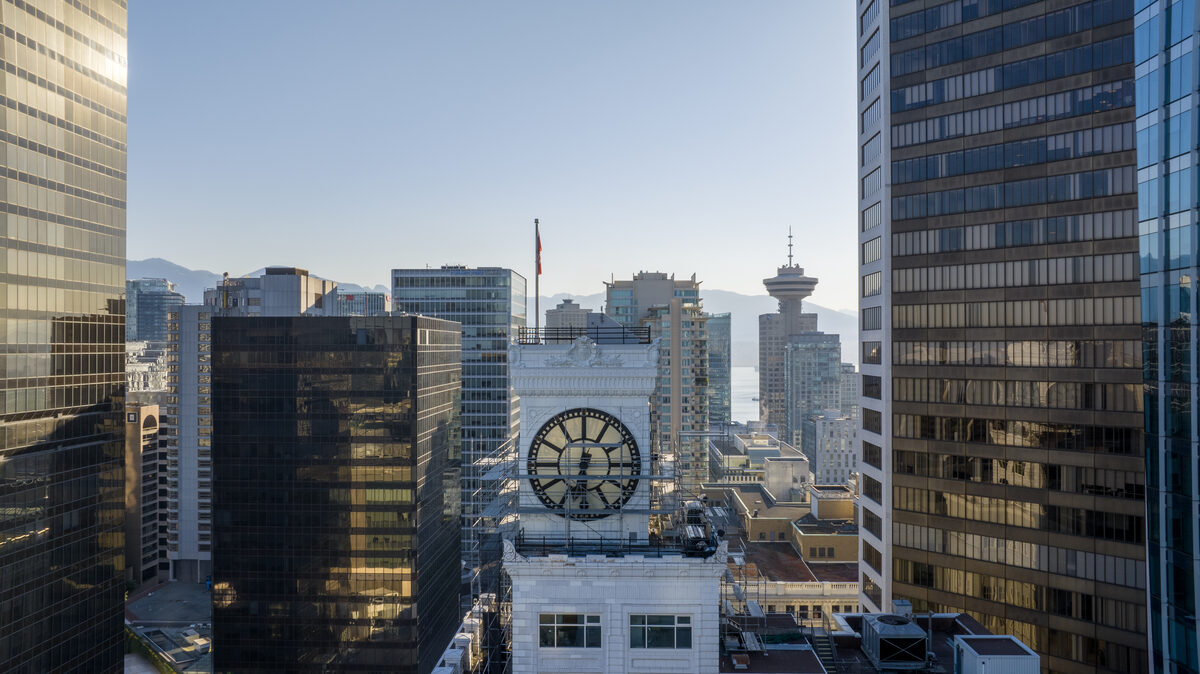
Vancouver Block itself stands as a bridge between these eras. It was built as an expression of one kind of entrepreneurial energy; it survives as an artefact that helps the present understand the roots of the city's commercial identity. Looking at the building today, surrounded by glass towers that dwarf it in height but not in ornamental ambition, we see the continuity of a city that has always believed in building its way forward.

Aerial view of Vancouver Block amidst the modern downtown skyline
Continuity & Change

Then & Now

Compare historical and contemporary views of Vancouver Block and its surroundings. The building endures while the city transforms around it.

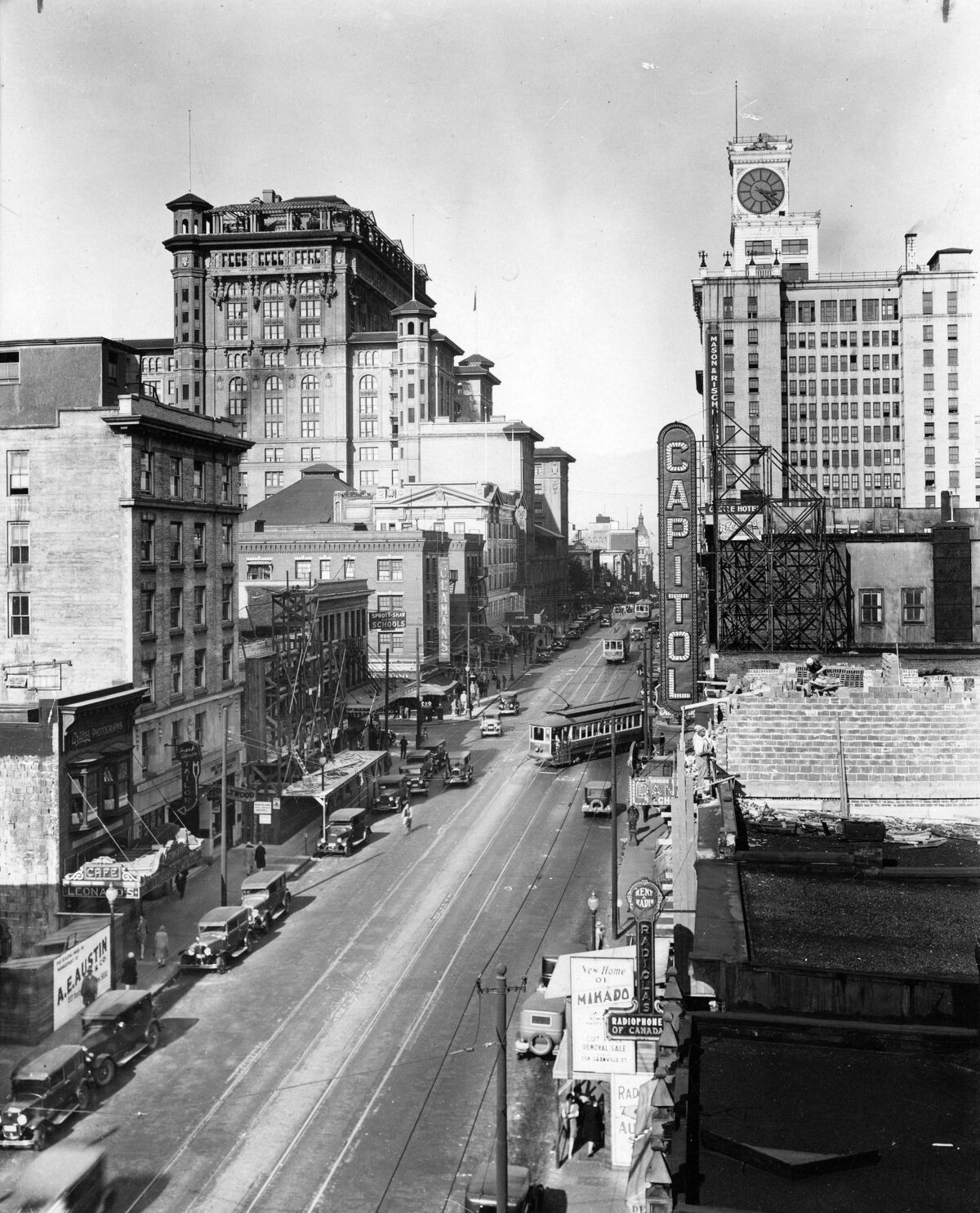
Historical view: Granville Street Looking North
c. 1920s
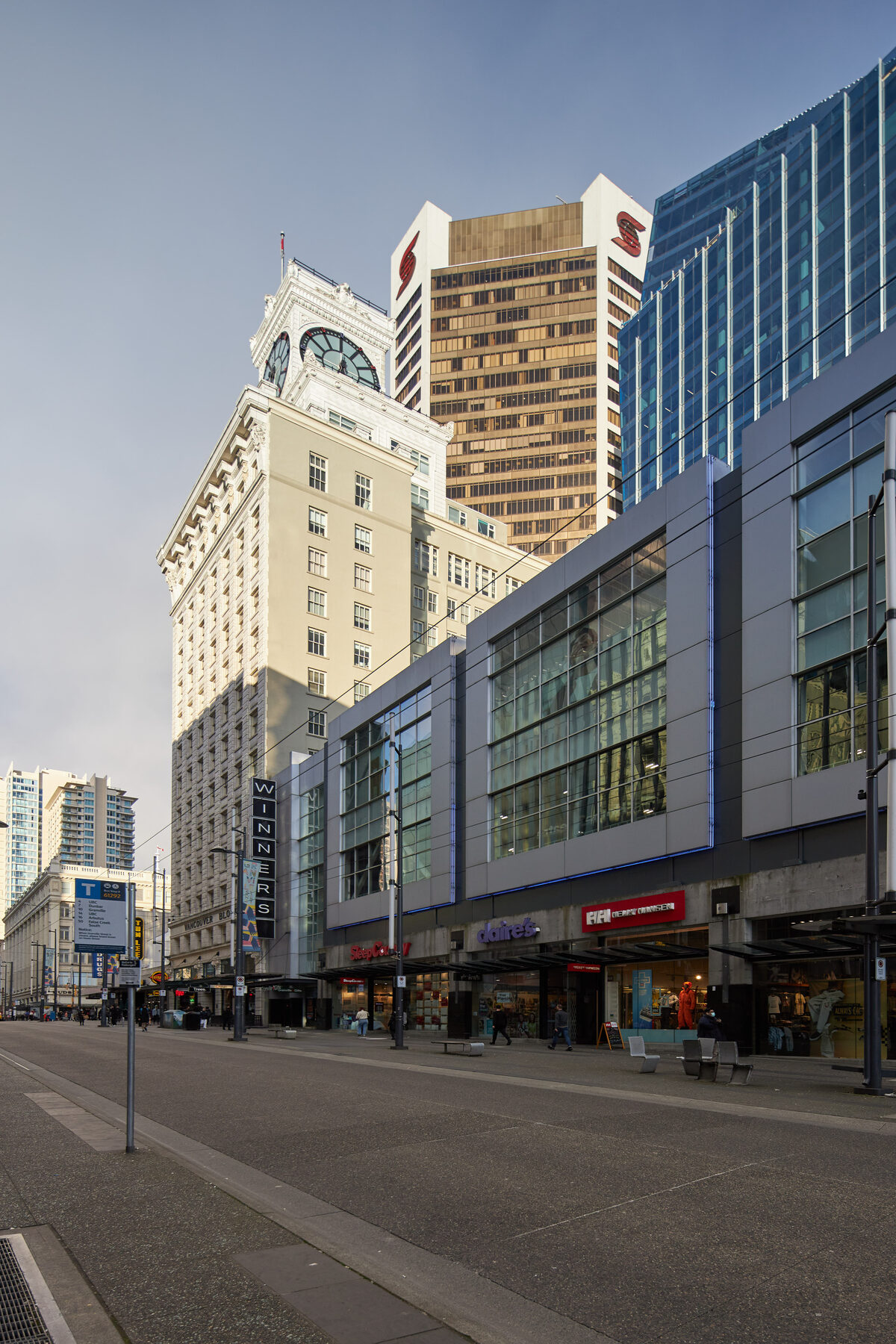
Contemporary view: Granville Street Looking North
Today

Granville Street Looking North

c. 1920sToday

Compare the commercial street wall, signage, transit patterns, and skyline around Vancouver Block. The building remains a constant reference point amid dramatic change.

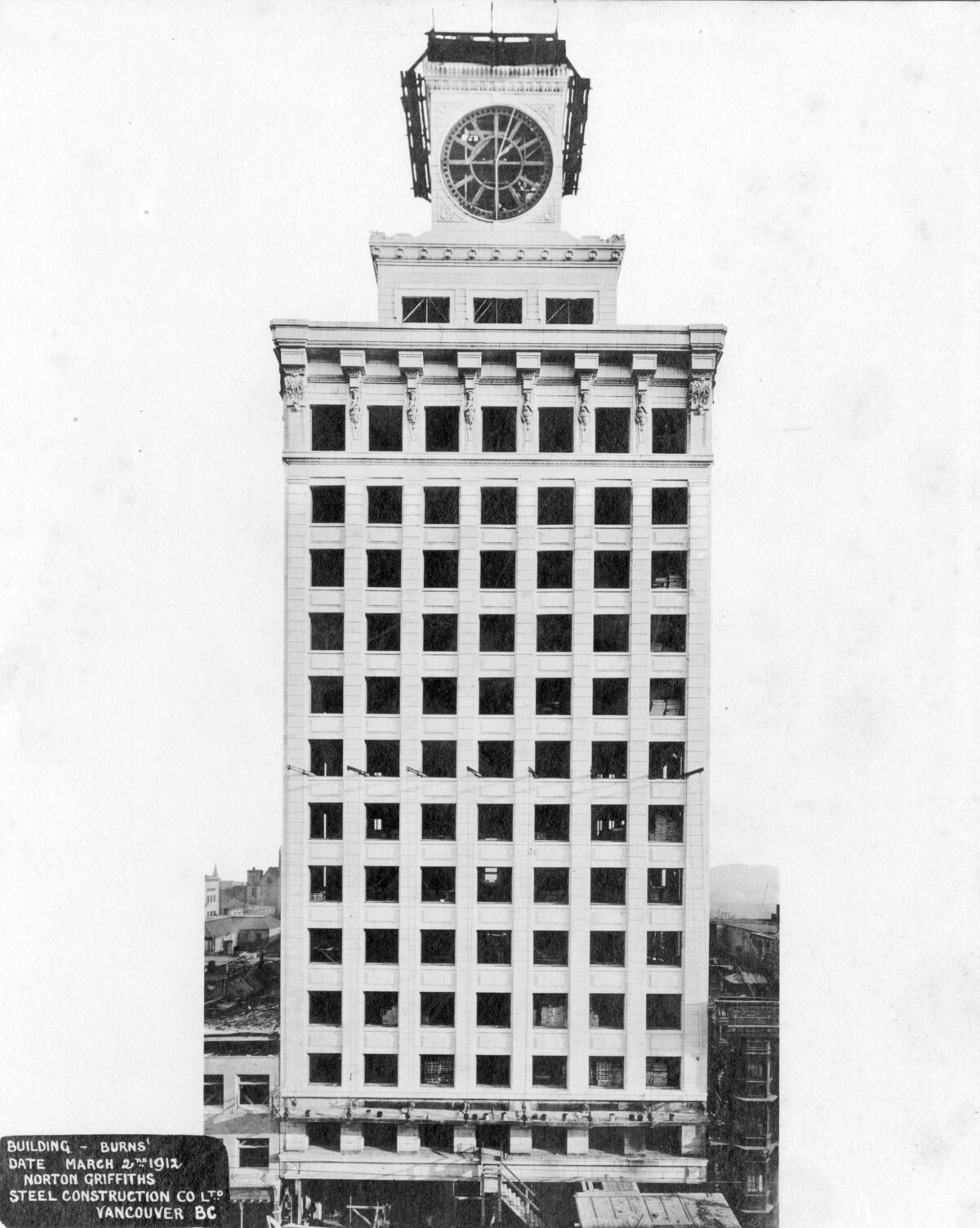
Historical view: The Clock Tower
1912
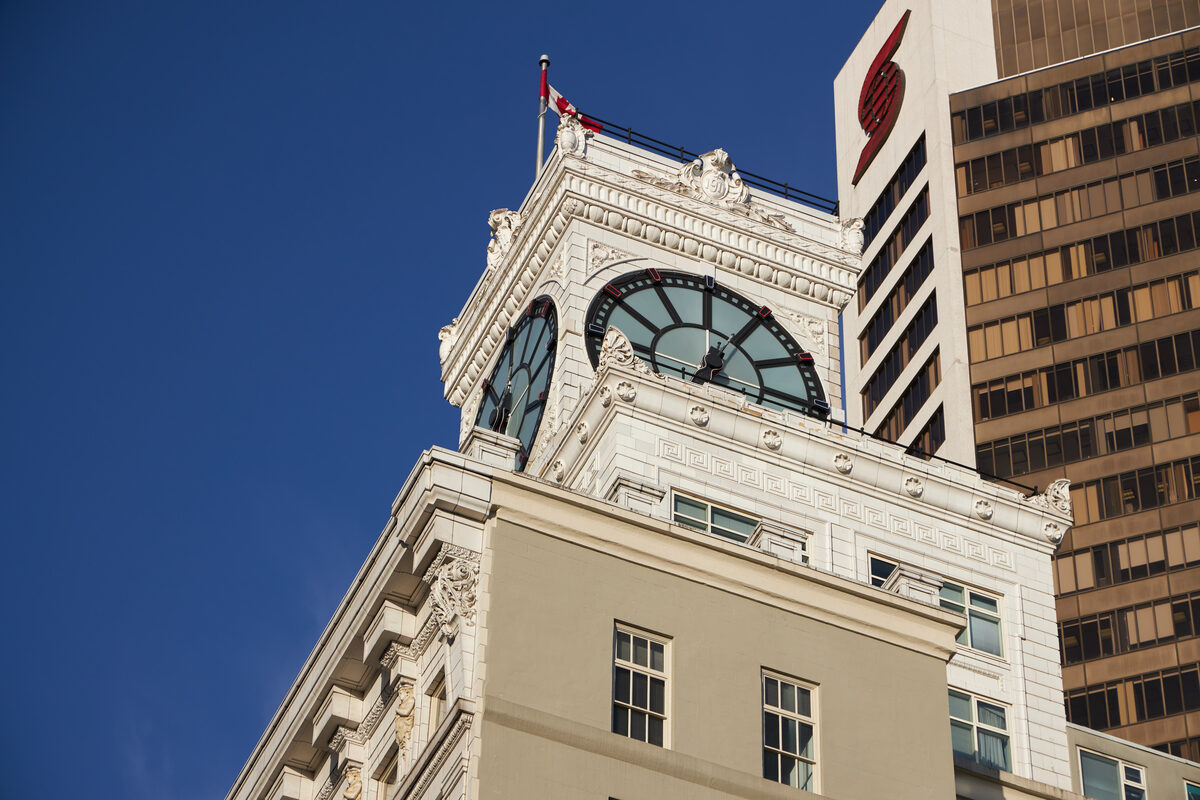
Contemporary view: The Clock Tower
Today

The Clock Tower

1912Today

The clock tower remains one of the building's most recognizable features, even as the surrounding skyline has evolved from masonry to glass.

Historical view: Granville Street Scene
1948
Contemporary view: Granville Street Scene
Today

Granville Street Scene

1948Today

From streetcars and neon signs to the modern pedestrian corridor. The clock tower has watched over a century of change on Vancouver's most important commercial street.

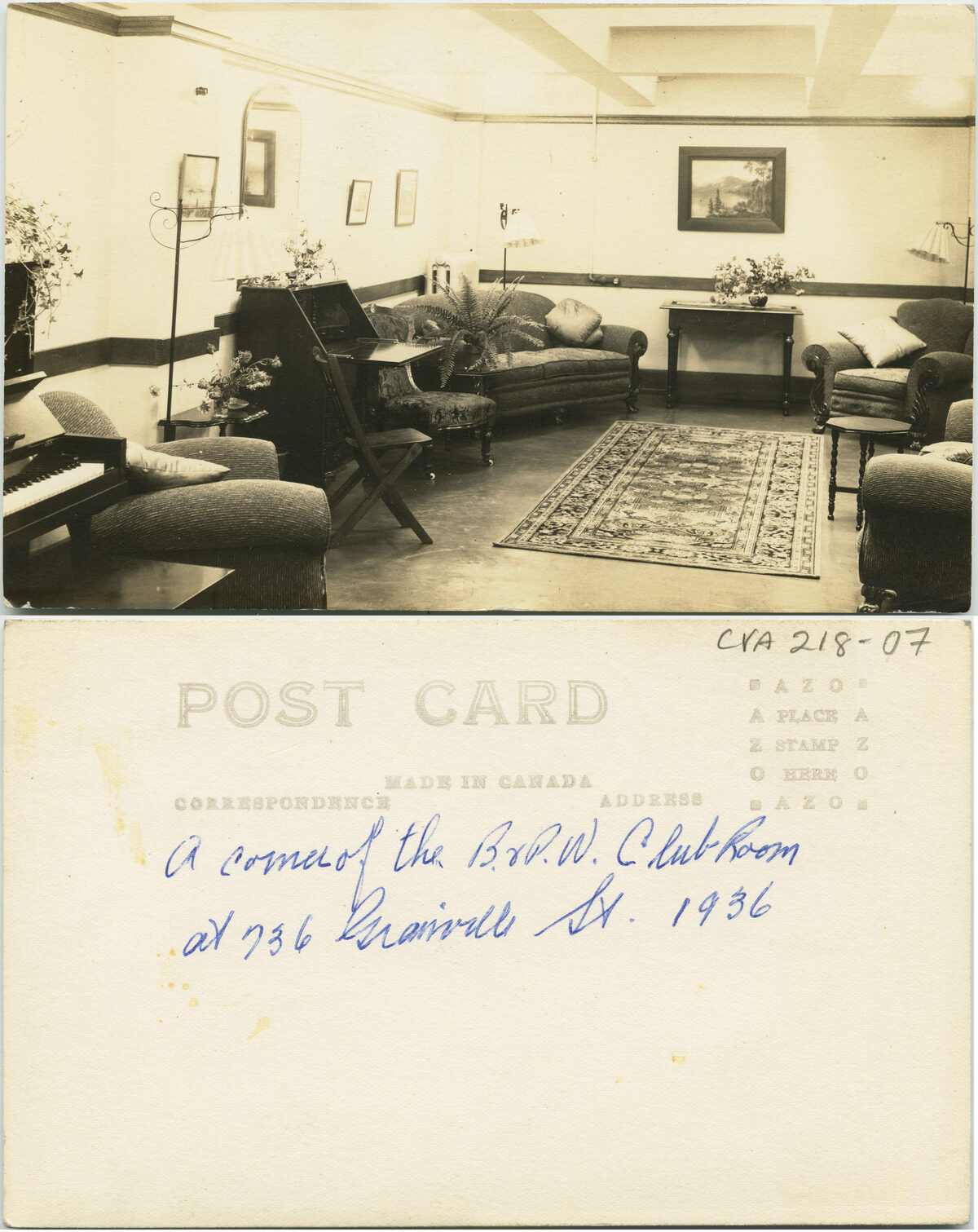
Historical view: The Building Interior
1936
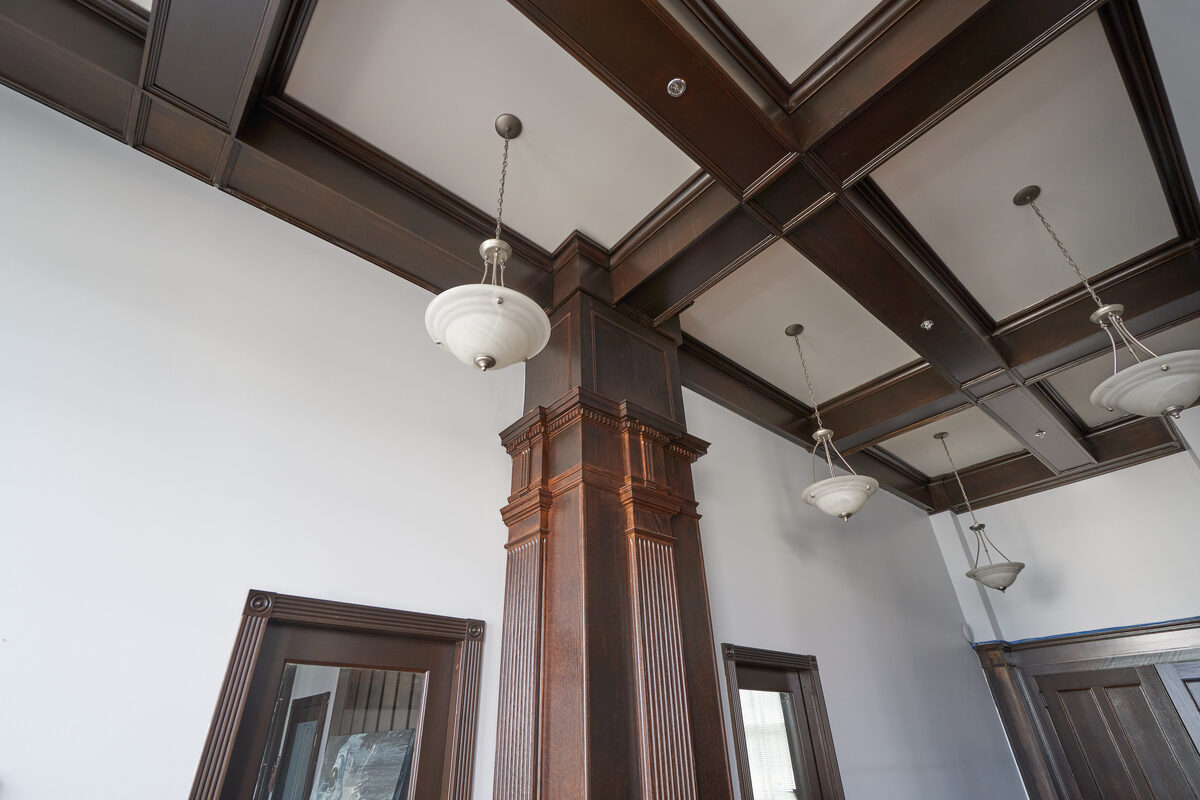
Contemporary view: The Building Interior
Today

The Building Interior

1936Today

The ground-floor spaces have served generations of Vancouver's business and social life. Compare the atmosphere of the Business & Professional Women's Club room to the restored lobby today.

Historical images courtesy of City of Vancouver Archives and BC Royal Museum Archives. Contemporary photography by Martin Knowles Photo/Media.

Vancouver Block was architecture as entrepreneurship: a visible, expensive, confidence-filled bet on the future of the city.

Context

Vancouver's Entrepreneurial History in Brick, Steel, and Terracotta

The commercial buildings of early twentieth-century Vancouver are monuments to entrepreneurial ambition. Constructed during a period of extraordinary growth, they represent the investments of individuals and companies who believed that the city's future justified significant capital expenditure. Vancouver Block, commissioned by meatpacking entrepreneur Dominic Burns and designed by the firm of Parr & Fee, is one of the most prominent surviving examples of this phenomenon.

The building's height, its terracotta and marble materials, its clock tower, and its location at the corner of Granville and Georgia Streets were all expressions of entrepreneurial confidence. They were designed not only to house commercial tenants but to signal the patron's belief in Vancouver's trajectory as a major Pacific coast city. Understanding this entrepreneurial context is essential to understanding why the building looks the way it does, why it was built where it was, and why it endures as a landmark more than a century later.

The story of Vancouver Block is, at its core, a story about the relationship between commerce and the built environment -- about how the ambitions of individual entrepreneurs become, over time, part of the shared physical fabric of a city.

Vancouver Block's full elevation on Granville Street